News Story
FPE Expert Tapped to Discuss Field Shortage with NFPA Journal
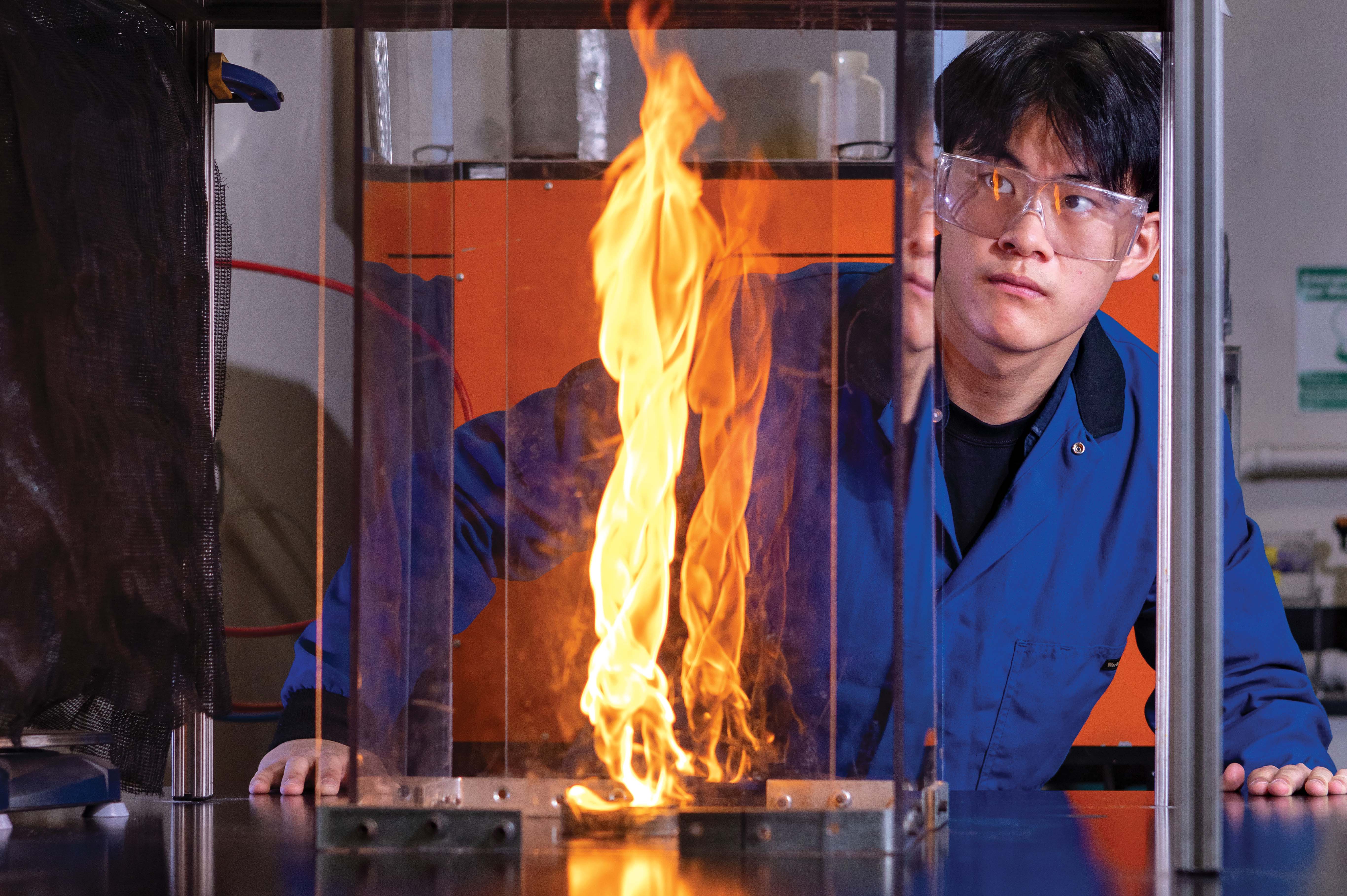
Experts at the University of Maryland Department of Fire Protection Engineering discussed the growing demand for professionals in the field, along with higher education recruitment challenges, and the rise of AI in the field, with the National Fire Protection Association (NFPA) Journal earlier last month.
William “Bill” Koffel, associate clinical professor in the department and director of the online program, sat down with Jesse Roman, host of the NFPA podcast, to discuss on-going recruitment efforts led by the department, the shortage of fire protection engineers, and the issue of low awareness for the field.
The hiring challenges for companies are reflected in the average salaries: According to SFPE surveys, fire protection engineers in the U.S. earned a median base salary of more than $130,000 per year in 2022, and the equivalent of about $90,000 in Europe. By comparison, civil engineers make a median of $95,000 in the U.S.; mechanical engineers have a median salary of about $99,000; and electrical engineers make a median of roughly $107,000, according to 2025 data compiled by U.S. News and World Report.
Additionally, graduates tend to see the return on their degree more quickly. A master’s graduate in fire protection engineering with less than five years of experience earns a median annual salary of about $103,000, according to SFPE surveys. Those with a bachelor’s degree in FPE earn a median of about $82,000 per year during their first five years on the job. But despite the attractive salaries, the field is still seeing a shortage of workers, and experts say this is likely an issue of awareness.
“Fire protection engineering is still the unknown child in engineering. When you pick up any publication that talks about careers in engineering, it’s basically going to talk about electrical, mechanical, civil, structural, those more traditional fields of engineering,” Koffel told the NFPA Journal.
Efforts to increase recruitment of undergraduate programs include UMD’s online undergraduate courses, which launched this fall, with the objective of growing the field by offering new opportunities for more students around the world to attend Maryland’s prestigious FPE program. Koffel also shared efforts marketing the program to international students across the globe, on every continent except for Antarctica.
Over the next five years, Koffel said, the goal is to gradually increase the size of Maryland’s online FPE undergraduate program so that it is as large as its traditional on-campus program, effectively doubling the number of FPE students graduating from the university each year.
Read the full NFPA Journal article, “Stoking the Flame,” and listen to the podcast episode.
Published December 17, 2025
Recent Stories
Stories / Oct 5, 2026
Celebrating LGBTQ+ History Month 2026

Stories / Oct 1, 2026
Kelly M. is Learning (and Advocating for Students) by Doing

Stories / Sep 24, 2026
Call for Application: Graduate Research Assistantship

Stories / Sep 22, 2026
Two Years Running, Maryland #12 Among Publics for Undergrad...

Stories / Sep 15, 2026
Honoring Achievement: Celebrating Latine Heritage Month

Stories / Sep 15, 2026
Tabatha Cuadra Rodriguez: Community Advocate

Stories / Sep 15, 2026
Jonathan Portillo Conducts Success as Fire Protection...

Stories / Sep 3, 2026
UMD Convocation will honor five from the Clark School

Stories / Aug 27, 2026
Maryland Engineering Student Organizations (MESO):...

Stories / Aug 26, 2026
Department Chair Delivers Plenary Talk at 41st International...
